
10 Fun Preschool Social Skills Games to Help Little Ones Connect and Communicate
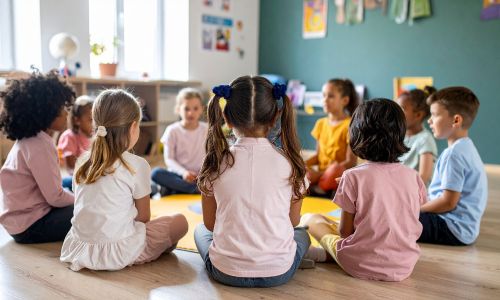
Preschool isn’t just about ABCs and 123s – it’s a crucial time for building the social-emotional foundation children need to make friends, cooperate, and manage their feelings. For many little ones, skills like taking turns, listening, and empathy are just as important as academic learning.
The good news? The best way to teach these skills is through play. This list of 10 easy, low-prep preschool social skills games helps children practice kindness, teamwork, and communication in a fun, stress-free way – perfect for both parents at home and teachers in the classroom.
Quick Summary: 10 Preschool Social Skills Games
Here’s a quick look at the games we’ll explore in detail. Each one targets specific social-emotional learning (SEL) goals.
Roll & Share: Practicing kindness and self-expression.
Taking Turns Tower: Learning patience and teamwork.
Emotion Charades: Identifying feelings and building empathy.
Musical Compliments: Giving and receiving positive feedback.
Slow & Steady Races: Focusing on cooperation over competition.
Friendship Puzzle: Collaborative problem-solving.
Mirror, Mirror: Non-verbal communication and turn-taking.
Sharing Circle: Active listening and respectful expression.
Follow the Leader – Feelings Edition: Understanding emotions through movement.
Kindness Catch: Combining positive affirmations with physical play.
Why Social-Emotional Skills Are a Preschool Priority
Between ages 3 and 5, children’s brains are wired for social connection. Playing games specifically designed to teach social skills helps your preschooler:
Learn to share and take turns, a foundation for all group interactions.
Practice active listening and following multi-step directions.
Recognise and name feelings in themselves and others, building empathy.
Build cooperation and teamwork skills essential for classroom success.
Develop confidence in group settings.
The best part? They’ll be having so much fun they won’t even realize they’re learning vital life skills.
Detailed Guide: How to Play Each Social Skills Game
1. Roll & Share: A Game of Kindness and Expression
Social Skill Focus: Sharing, kindness, self-expression.
What You’ll Need: A soft dice or a paper cube with numbers 1–6.
How to Play: Assign each number a prompt (e.g., 1=Share your favorite food, 2=Say something kind). Preschoolers roll the dice and do the matching action. This game provides a safe structure for shy children to participate.
Pro Tip for Adults: Model the actions first to help children understand. Praise effort over perfection.
2. Taking Turns Tower: Building Teamwork and Patience
Social Skill Focus: Taking turns, teamwork, patience.
What You’ll Need: Blocks or Duplo.
How to Play: Children build a tower together by taking turns adding one block at a time. The key rule is patience—only one person builds at a time. Celebrate together when the tower is complete!
Pro Tip for Adults: Use language like, “It’s Jamie’s turn now, then it will be your turn. Let’s watch and see how tall it gets!”
3. Emotion Charades: Naming Feelings to Build Empathy
Social Skill Focus: Recognising emotions, empathy.
What You’ll Need: Simple emotion cards (happy, sad, surprised, angry, scared, excited).
How to Play: One child picks a card and acts out the emotion without words. The others guess the feeling. Afterwards, briefly discuss times when they’ve felt that way themselves.
Pro Tip for Adults: This is a great opportunity to validate all emotions. Say, “It’s okay to feel angry sometimes. What can we do when we feel that way?”
4. Musical Compliments: Building Self-Esteem
Social Skill Focus: Giving and receiving praise, positive communication, building self-esteem.
What You’ll Need: Upbeat music and a soft ball or small stuffed toy.
How to Play: Have the children sit in a circle. Start the music and have them pass the ball around. When the music stops, the child holding the ball says something kind or complimentary about the person to their left (e.g., “I like your singing voice,” or “You’re a good sharer”). Resume the music and continue until everyone has given and received a compliment.
Pro Tip for Adults: For shy children, you can suggest simple, observable compliments like “I like your red shirt” to start. This game is powerful for creating a positive and supportive group dynamic.
5. Slow & Steady Races: Cooperation Over Competition
Social Skill Focus: Cooperation, self-control, participating without a focus on winning.
What You’ll Need: An open space indoors or outdoors.
How to Play: Instead of racing to be the fastest, challenge the children to move slowly and carefully from one point to another. Give them themes like “walk slowly like a turtle,” “tiptoe quietly like a mouse,” or “waddle like a penguin.” Emphasize that the goal is for everyone to finish together.
Pro Tip for Adults: Use phrases like, “Let’s see if our whole turtle family can reach the log together!” This reinforces the idea that success is about teamwork, not being first.
6. Friendship Puzzle: Collaborative Problem-Solving
Social Skill Focus: Collaboration, problem-solving, communication.
What You’ll Need: A simple, sturdy puzzle with large pieces (or create your own by cutting a large picture mounted on cardboard into 4-6 pieces).
How to Play: Give each child one or two puzzle pieces. Explain that they need to work together to complete the picture. They will have to communicate, trade pieces, and figure out where their piece fits as a team.
Pro Tip for Adults: Choose a puzzle image that represents friendship or teamwork. Celebrate enthusiastically as a group when the puzzle is complete, highlighting that “We did it together!”
7. Mirror, Mirror: Non-Verbal Communication
Social Skill Focus: Turn-taking, observation, non-verbal communication, and cooperation.
What You’ll Need: Just a pair of children (or the adult and a child).
How to Play: Partners face each other. One child is the “leader” and makes slow, simple movements (e.g., waving, nodding, making a silly face). The other child is the “mirror” and must copy the movements exactly. After a minute or so, have the children switch roles.
Pro Tip for Adults: Model this first with a child. Encourage the leader to move slowly to help their partner succeed. This game requires fantastic focus and empathy.
8. Sharing Circle: Respectful Listening
Social Skill Focus: Active listening, respectful communication, taking turns speaking, expressing thoughts.
What You’ll Need: A special “talking stick” (a decorated stick), a soft toy, or any object that can be passed around.
How to Play: Have the children sit in a circle. Explain that only the person holding the talking stick may speak. Start with a simple, open-ended prompt like, “What is your favorite animal?” or “What made you feel happy today?” Pass the stick around the circle so each child has a turn.
Pro Tip for Adults: This is a great calming activity. Keep it short and positive. If a child doesn’t want to speak, allow them to “pass” the stick to reinforce that their choice is respected.
9. Follow the Leader – Feelings Edition: Understanding Emotions
Social Skill Focus: Identifying and expressing emotions, following directions, leadership.
What You’ll Need: Space to move around.
How to Play: One child is the leader. Instead of just doing actions, the leader chooses an action that represents a feeling (e.g., “Stomp your feet like you’re angry,” “Jump for joy like you’re excited,” “Shrink down small like you’re shy”). The rest of the group copies the action and guesses the feeling.
Pro Tip for Adults: This is an excellent way to validate all emotions. After guessing the feeling, you can briefly add, “It’s okay to feel angry sometimes. What’s a calm thing we can do when we feel that way?”
10. Kindness Catch: Positive Affirmations
Social Skill Focus: Kindness, confidence, positive social interaction, turn-taking.
What You’ll Need: A soft, easy-to-catch ball.
How to Play: Children stand in a circle. One child holds the ball and says something kind to the child they are about to throw it to (e.g., “You are a good builder,” or “I like playing with you”). They then toss the ball to that child, who says “thank you,” before choosing someone else to compliment and throw to.
Pro Tip for Adults: Some children may need help thinking of a kind phrase. Have a few suggestions ready. This game seamlessly combines physical activity with purposeful kindness.
Answering Your Questions: Preschool Social Skills FAQ
What if a child doesn’t want to participate?
That’s perfectly normal! Never force participation. Instead, allow them to be an observer. Often, after watching the fun, they’ll feel comfortable enough to join in. You can also ask them to help you with a supporting role, like holding the music button.
How can I adapt these games for a shy child?
Start with low-pressure games like Mirror, Mirror or Slow & Steady Races in pairs rather than large groups. Keep the group small and familiar, and always offer the option to pass their turn without judgment.
How long should these games last?
Follow the children’s lead! A preschooler’s attention span is short. 5-10 minutes per game is often plenty. It’s better to end the game while they’re still enjoying it than to push until they become frustrated.
Practice Makes Progress
Preschool is where children build the foundation for lifelong relationships. By introducing these simple preschool social skills games, you’re giving them the tools to make friends, express themselves, and collaborate with confidence.
Remember- social skills aren’t about perfection. They’re about practice, patience, and plenty of giggles along the way. So next rainy afternoon or playdate, try out one of these games. You’ll be amazed at how quickly your little one grows—not just in skills, but in kindness and connection too.

A home away from home, a place where the teachers love your kids as if they were their own. Fuelled by quality education and unconditional love, The Pebblestone’s Staff are passionate about laying a strong foundation in a child’s life.
Our Gallery


© All Rights Reserved – 2024